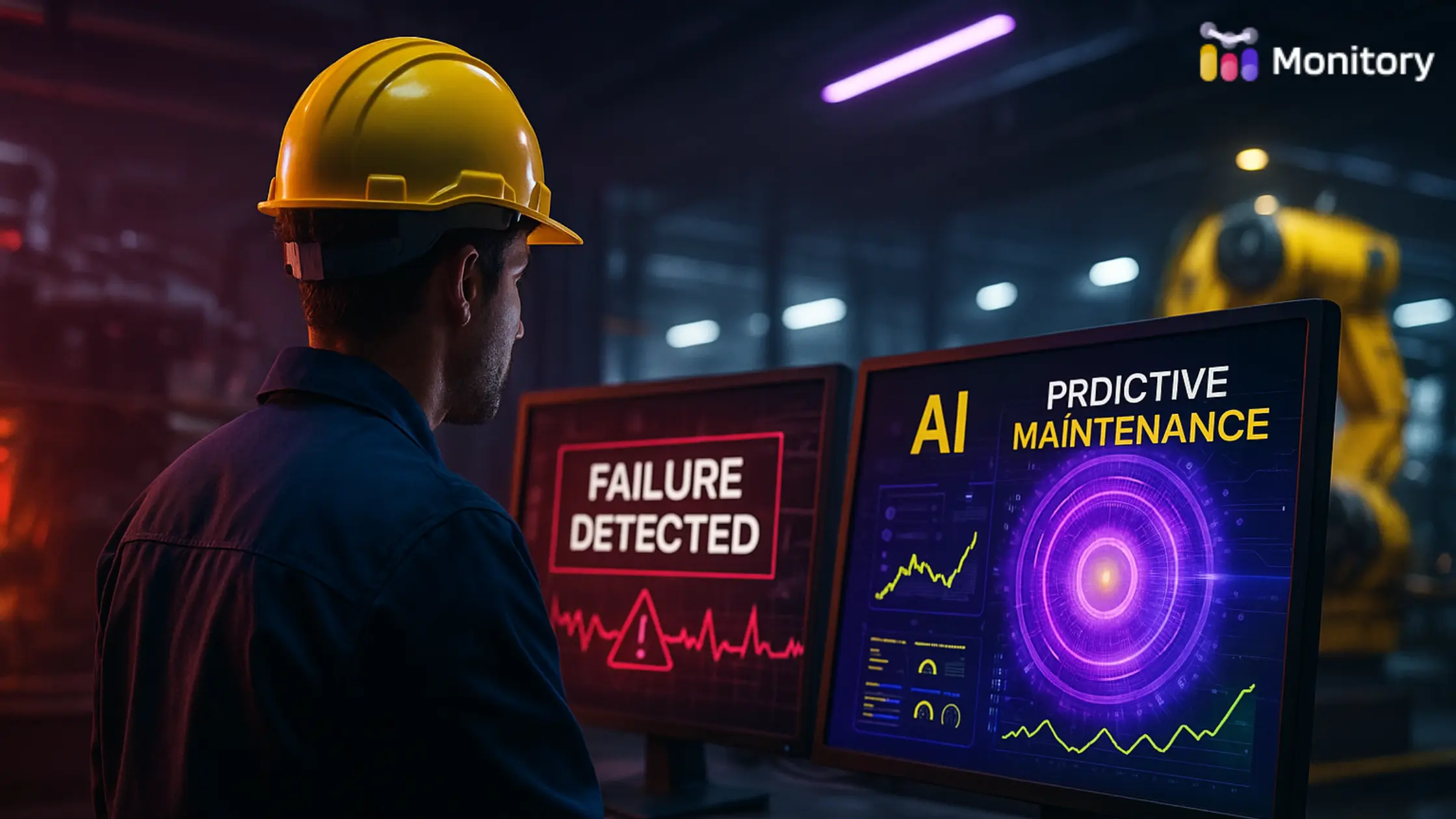
You’re in the middle of your shift. The machines hum, the conveyors roll, the reports show “all green.” Then boom a critical asset fails. Production halts. You scramble. The cost mounts. If only you’d seen the warning coming.
That’s exactly what this blog is about: how predictive maintenance gives you the chance to see the warning signs before disaster strikes, and shift from firefighting to foresight.
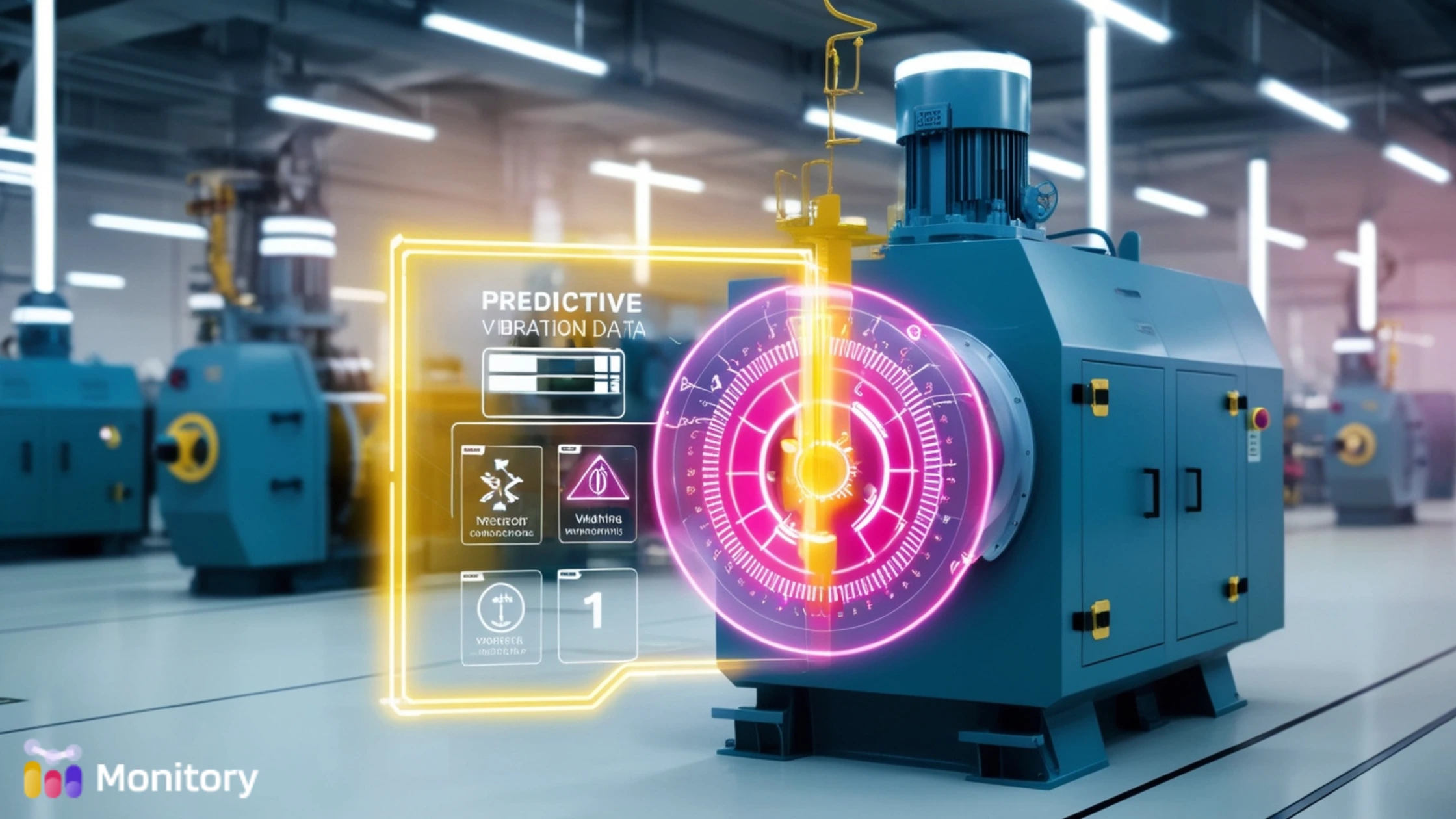
At the surface, the idea is straightforward: instead of waiting for a machine to break or sticking to a calendar schedule, you monitor equipment condition and use data to determine the right time to intervene.
In a deeper sense, predictive maintenance means you’re listening to your equipment, letting sensors, analytics, and intelligence tell you when a part is about to fail.
Here’s how it stands out:
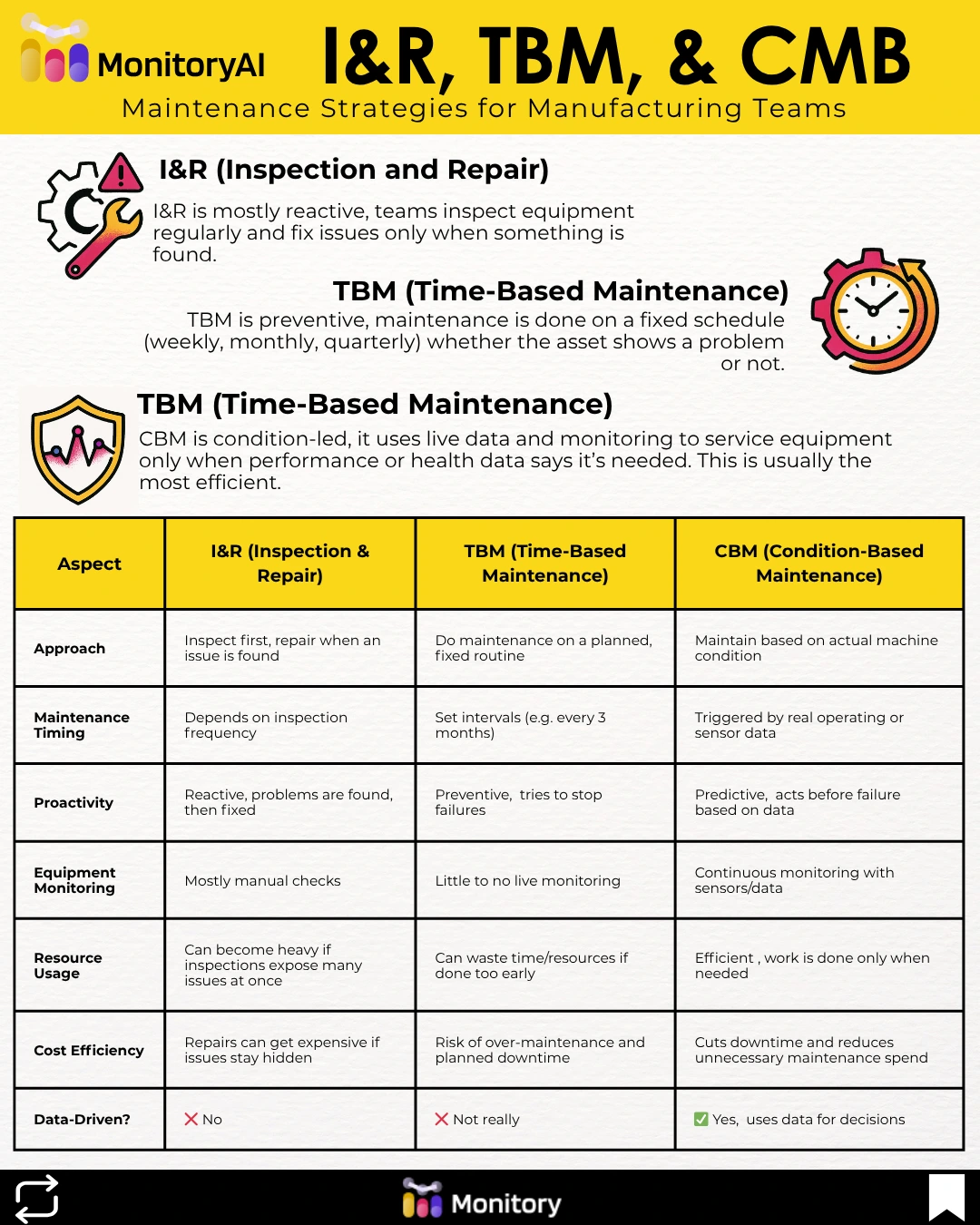
Manufacturing teams often use three core maintenance strategies:
Predictive maintenance falls into the CBM category and is the most forward-looking of the three.
Downtime doesn’t only cost money. It drains morale. It wears your team out. When you don’t know why something happened, or when you lose control.
Emotional impacts:
Predictive maintenance offers relief: fewer surprises, more time to plan, and a team that feels ahead instead of behind.
The shift from reactive or preventive to predictive maintenance brings hard numbers and qualitative gains.
In short, you spend less time in fire mode. You gain control. You get time back.
It takes method and investment. Here’s the roadmap:
Not every component needs ultra-sophisticated monitoring. Start with assets whose failure hits you hardest: expensive equipment, critical lines, and safety risks.
Deploy sensors or use existing data streams: vibration, temperature, oil condition, pressure, noise. Feed that into a system that tracks deviation from normal behaviour.
Data alone isn’t enough. Analytics (machine learning, pattern detection) must convert raw signals into alerts you trust. Then you schedule maintenance at the optimum time, neither too early nor too late.
Your team needs to trust the system. You need protocols that turn alerts into action. Resistance kills change. Think of training, visibility, and consistency.
This is a journey, and you’ll bump into obstacles. Knowing them gives you an edge.
Imagine this: Instead of hearing about a breakdown at 3 am, your team gets a subtle alert at 9 pm: “Bearing vibration trending +20% in line #7.” They investigate, schedule a short downtime at 7 am, swap the bearing, and the line runs clean for another month.
That’s what predictive maintenance buys you: peace of mind, time back, and a team that goes from reactive to confident.
If your maintenance strategy is stuck in the calendar or fire mode, you’ll keep paying with time, hours, and risk. But predictive maintenance gives you a choice: you decide when to act and avoid the worst-case scenario.
Take this as your invitation: look at your assets today. Which one would you most hate to see fail? Start monitoring it. Start the charting of normal. Start the alert that tells you exactly when things go off-track.
When machines hum instead of crashing, you win trust, reliability, and time.
Predictive maintenance isn’t just a nice-to-have. It’s the shift that separates reactive teams from resilient ones.
If you're ready to reduce downtime, increase efficiency, and turn your data into decisions, it's time to move forward with Monitory AI.
Explore How Monitory Works because guessing is expensive, but foresight is powerful