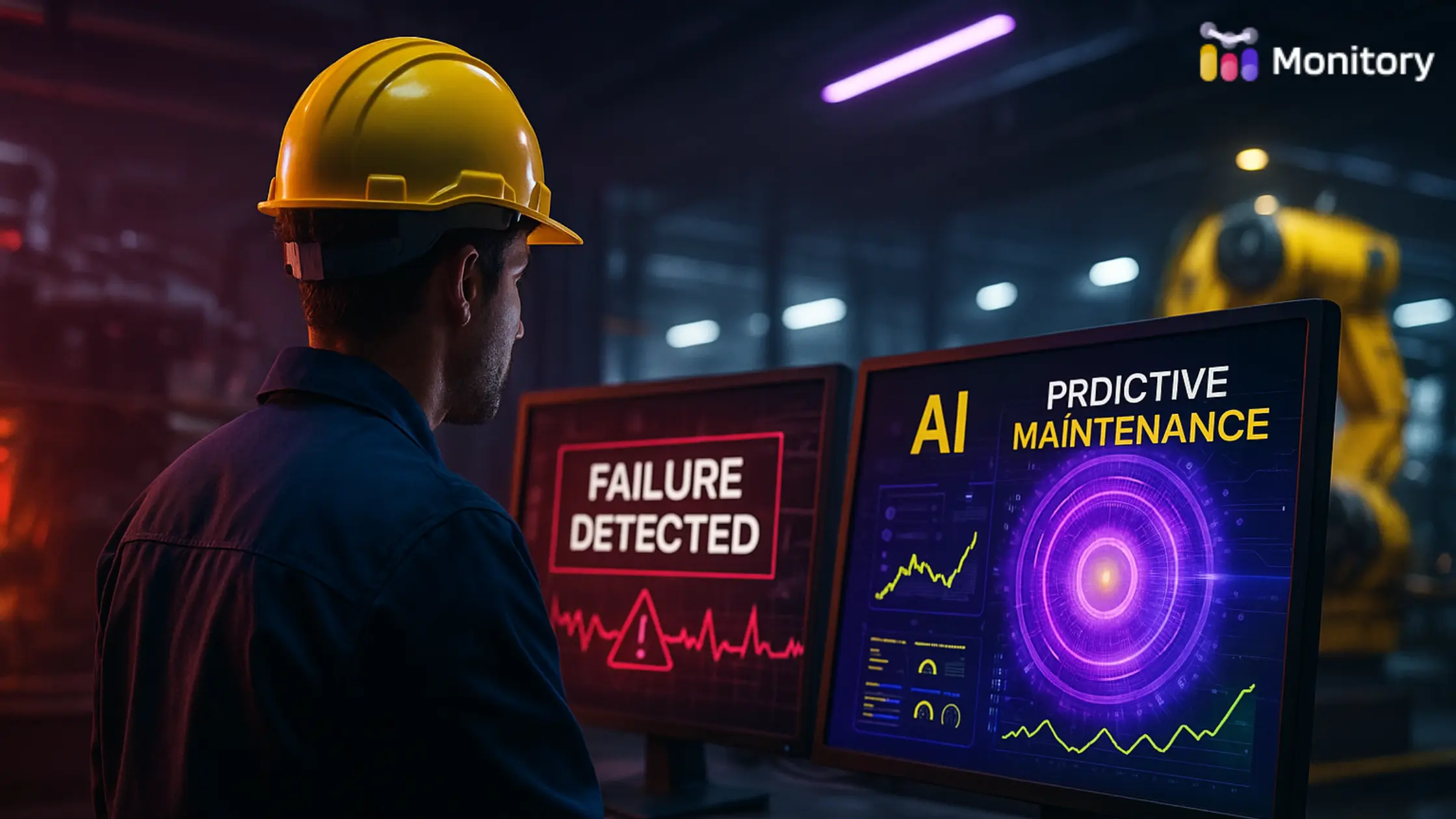
Equipment failure rarely gives notice. It disrupts production, forces emergency repairs, and turns minor issues into major financial damage.
Executives don’t worry about maintenance. They worry about unpredictability.
So let’s answer it clearly.
What is predictive maintenance? It is a maintenance strategy that uses real-time equipment data, analytics, and machine learning to anticipate failure before breakdown happens. Instead of reacting to damage or servicing machinery on fixed schedules, predictive systems analyze asset condition and trigger action only when risk increases.
That distinction changes cost structure, uptime reliability, and operational control.
To understand what predictive maintenance is in practice, compare it to traditional models.
Reactive repair waits for failure.
Scheduled servicing replaces components based on calendar assumptions.
Both approaches ignore the actual equipment condition.
Predictive maintenance relies on:
Sensors collect vibration, pressure, temperature, and acoustic signals continuously. Analytics platforms compare live performance against historical baselines. When patterns resemble past failure signatures, alerts trigger intervention.
The result is targeted action instead of routine guesswork.
That is what predictive maintenance delivers: precision.
Many teams still ask what predictive maintenance is operationally. The process follows four structured phases.
IoT-enabled equipment streams live operational data into centralized systems. Rotating machinery, compressors, motors, and pumps generate measurable performance signatures.
Condition monitoring software evaluates deviations from normal behavior. Even subtle shifts can indicate wear progression.
Machine learning algorithms analyze patterns across thousands of performance cycles. When the system identifies a failure trajectory, it calculates likelihood and severity.
Work orders trigger inside CMMS platforms before breakdown occurs. Repairs align with planned downtime instead of an emergency shutdown.
This closed-loop system defines predictive maintenance at scale.
Understanding what predictive maintenance is becomes easier when contrasted with preventive maintenance.
Preventive servicing assumes averages. Predictive strategies respond to real degradation.
That difference reduces labor waste, spare inventory costs, and production interruptions.
Predictive maintenance depends on a coordinated technology stack.
Sensors provide the raw performance data required for advanced analysis.
APM systems consolidate operational data across facilities and prioritize risk by business impact.
Analytics engines detect early warning patterns invisible to manual inspection.
Edge computing handles time-sensitive alerts locally. Cloud systems store long-term data for model refinement.
Together, these tools operationalize predictive maintenance across distributed environments.
When leaders evaluate what is predictive maintenance financially, the impact appears in measurable metrics:
Organizations shift from reactive firefighting to structured reliability management.
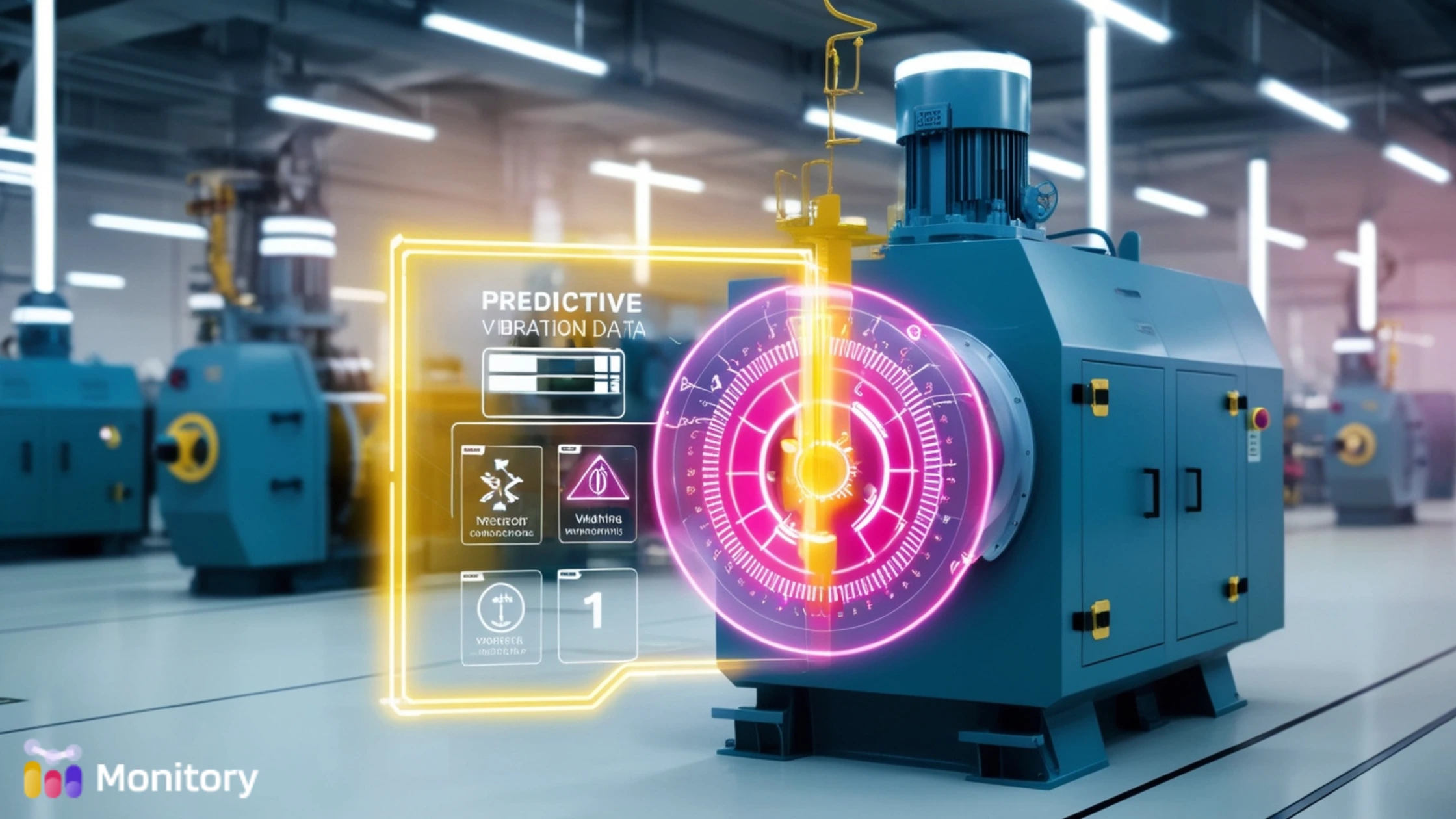
Vibration monitoring identifies imbalance in rotating assemblies before catastrophic bearing failure stops production.
Thermal imaging detects transformer overheating and prevents grid outages.
Telematics systems monitor engine diagnostics and forecast component fatigue before roadside failure.
Across sectors, predictive maintenance reduces uncertainty.
Adoption requires discipline.
Common obstacles include:
Organizations that succeed begin with critical assets, establish baseline data accuracy, and align predictive insights with maintenance execution systems.
Let’s close it clearly.
What is predictive maintenance? It is the transition from reactive repair to intelligence-driven reliability. By combining IoT sensors, condition monitoring, asset performance management platforms, and advanced analytics, organizations anticipate failure before it disrupts operations.
Downtime shrinks. Costs stabilize. Asset life extends.
If maintenance still depends on fixed schedules or emergency response, the real question is not what predictive maintenance is.
The real question is how long your operation can afford to operate without it.